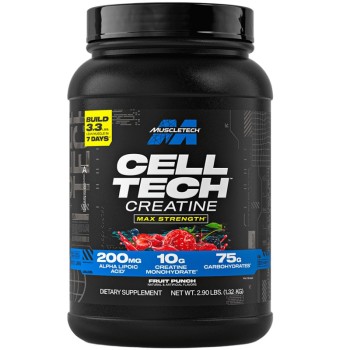
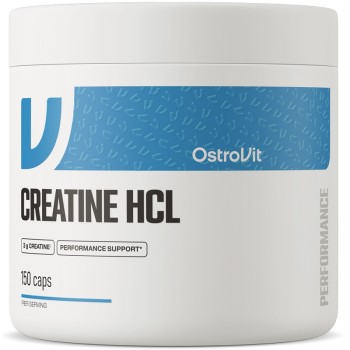
Creatine hydrochloride, often written as creatine HCl, is a form of creatine where creatine is bound to hydrochloric acid. The main reason people choose it is practical: it usually mixes well, serving sizes are often smaller, and some users find it easier on the stomach compared with standard creatine monohydrate.
That does not mean creatine HCl is automatically “stronger” or better for everyone. If we have to be precise, creatine monohydrate still has the strongest body of research behind it for strength, power output and repeated high-intensity performance. Creatine HCl is mainly a choice for people who want a more soluble form, prefer smaller servings, or have had discomfort with monohydrate.
This category is useful if You already understand what creatine can and cannot do, and You want to choose a creatine HCl product without falling for exaggerated claims.
What creatine HCl can realistically support
Creatine helps increase the availability of phosphocreatine in muscle cells. In simple terms, this supports the body’s ability to regenerate ATP during short, intense efforts such as heavy sets, sprints, jumps and repeated explosive work.
In practice, creatine supplementation may support:
- strength performance during resistance training;
- training volume, especially when sets are repeated with short to moderate rest periods;
- power output in high-intensity efforts;
- muscle fullness in some users, mostly through increased intracellular water;
- consistent performance when training hard several times per week.
The effect is not instant in the way caffeine feels instant. Creatine works through saturation over time. Some people notice better workout performance after a few weeks. Others notice only small changes. That is normal.
When creatine hydrochloride makes sense
Creatine HCl has the most practical value when the limitation is not the idea of creatine itself, but tolerance, convenience or preference.
It may make sense if:
- You want creatine, but dislike the texture or mixing of some monohydrate powders;
- You have experienced bloating or stomach heaviness with standard creatine monohydrate;
- You prefer smaller serving sizes;
- You want a capsule form and do not want to measure powder every day;
- You train with weights, sprint work, combat sports, CrossFit-style sessions or other repeated high-intensity efforts;
- You already have enough protein and calories for Your goal, and You are looking for a performance-support supplement rather than a meal replacement.
For many shoppers, the most honest reason to choose creatine HCl is not “more gains”. It is easier daily use. If a supplement is easier to take consistently, that can matter.
When creatine HCl is not the right solution
Creatine HCl is not a fat burner. It does not directly “cut” body fat, replace a calorie deficit or compensate for inconsistent training. If Your main goal is weight loss, creatine may still be useful for keeping training performance higher, but it is not the tool that creates the deficit.
It is also not the first thing to buy if Your diet is very low in protein, Your workouts are random, or sleep is consistently poor. In those cases, creatine can still work biologically, but the visible result may be limited because the foundation is weak.
Creatine HCl may not be the best choice if:
- You want the most researched and usually most cost-effective creatine form;
- You tolerate creatine monohydrate well and have no issue with serving size or mixing;
- You expect dramatic changes in a few days;
- You are buying it only because a label claims “no water retention” or “much stronger than monohydrate”;
- You have kidney disease, significant medical concerns, or take medication that requires professional supervision.
If You have a diagnosed medical condition, are pregnant or breastfeeding, or are under 18, it is better to speak with a qualified healthcare professional before using creatine supplements.
Creatine HCl vs creatine monohydrate: the practical difference
The comparison matters because many buyers look at creatine HCl as an upgrade. Sometimes it is. Often it is simply a different format.
Creatine monohydrate is the reference form. It is widely studied, affordable and effective for many people. If You tolerate it well, there is no strong reason to switch only because HCl sounds more advanced.
Creatine hydrochloride is typically promoted for better solubility and smaller servings. Those are real practical advantages for some users. However, the claim that it produces clearly superior strength or muscle results in healthy trained people is not well established. Be cautious with brands that present HCl as if monohydrate is outdated. That is more marketing than balanced advice.
A simple way to decide: if You want the best researched option per serving, monohydrate usually wins. If You want a more convenient or better-tolerated option and accept a higher price per gram, creatine HCl can be a reasonable choice.
Types of creatine HCl products
Pure creatine HCl powder
This is the most straightforward option. It usually contains creatine hydrochloride without stimulants, flavor systems or extra performance ingredients. It is suitable if You want control over timing and serving size. The taste can be sharp or acidic, depending on the formula, so some people prefer mixing it with flavored drinks.
Creatine HCl capsules or tablets
Capsules are convenient for people who travel, train after work or do not want powder. The trade-off is that You may need several capsules depending on the serving size, and the price per effective serving can be higher. Always check how much creatine HCl is provided per capsule, not only how many capsules are in the bottle.
Creatine HCl blends
Some products combine creatine HCl with other creatine forms, amino acids, electrolytes, pump ingredients or pre-workout components. These can be useful, but only if the full formula makes sense. A blend is not automatically better. Sometimes it simply makes the label look more impressive while reducing the amount of each active ingredient.
How to choose a good creatine HCl product
Start with the label, not the marketing claim. A good creatine HCl product should make it easy to understand what You are actually getting.
- Check the exact form: the label should clearly state creatine hydrochloride or creatine HCl.
- Look at the amount per serving: do not judge only by container size. Compare servings and the active amount in each serving.
- Prefer transparent formulas: avoid products where creatine is hidden inside a proprietary blend with unclear quantities.
- Consider format: powder is usually more flexible; capsules are more convenient.
- Check added stimulants: creatine itself is not a stimulant, but some blends may contain caffeine or other stimulating ingredients.
- Match it to Your routine: the best product is the one You can take consistently without stomach discomfort or inconvenience.
Timing is less important than consistency. Many people take creatine daily, either around training or with a meal. Follow the product label, especially because creatine HCl serving sizes vary between brands. More is not automatically better.
Red flags when shopping for creatine HCl
Creatine is a useful supplement, but the category attracts aggressive marketing. Be careful with claims that sound too clean or too dramatic.
- “No water retention at all” - creatine can increase water inside muscle cells. That is part of how it works and should not be presented as a problem by default.
- “Guaranteed muscle gain” - muscle gain depends on training, nutrition, recovery and time.
- “Burns fat” - creatine is not a fat-loss supplement.
- “Much stronger than monohydrate” - this is not a balanced evidence-based statement.
- Unclear blends - if the amount of creatine HCl is not stated clearly, comparison becomes difficult.
- Overcomplicated formulas - extra ingredients are not bad, but they should have a reason to be there.
Who should be more careful
Healthy adults commonly use creatine, and it is one of the better-studied sports supplements as a category. Still, caution is sensible. If You have kidney problems, a medical diagnosis, take prescription medication, or have been advised to monitor kidney markers, do not use creatine as a casual self-experiment. Ask a healthcare professional first.
Also be careful with pre-workout blends that include creatine HCl plus stimulants. The creatine is not the issue there; the stimulant load may be, especially if You have high blood pressure, anxiety, sleep problems or already drink a lot of caffeine.
A practical way to decide
Choose creatine HCl if You want the benefits of creatine in a form that is usually easy to mix, simple to take and potentially gentler for Your digestion. Choose another creatine form if price per serving and the strongest research base matter more to You than solubility or capsule convenience.
If You are unsure, keep the decision simple. If You have never used creatine before and tolerate supplements well, a standard creatine monohydrate may be enough. If You have tried monohydrate and did not like the stomach feel, texture or serving size, creatine hydrochloride is a reasonable next option.
Browse the creatine HCl products in this category by comparing serving size, format, ingredient transparency and price per usable serving. The right choice is not the loudest label. It is the product that fits Your training, digestion, budget and expectations.