

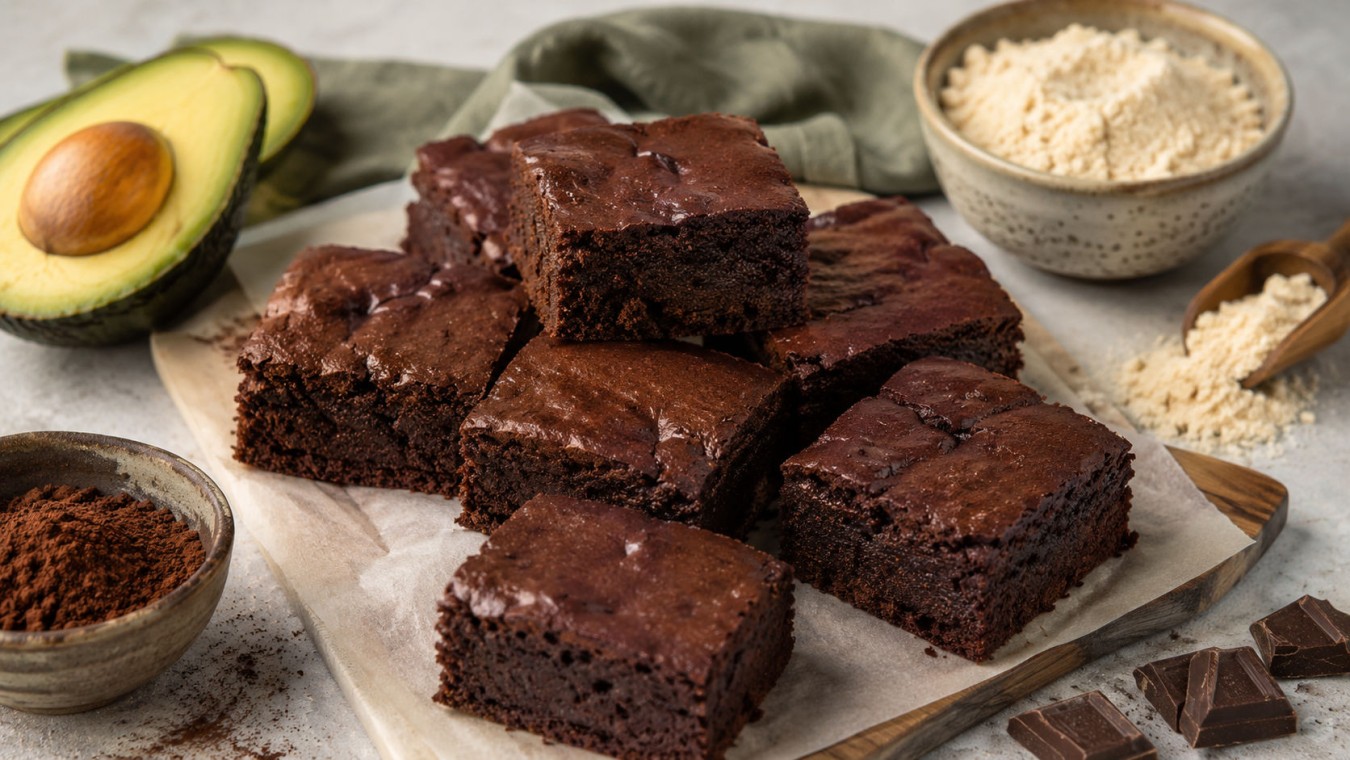
The first question is usually the same: can you taste the avocado? Honestly - no, if it's ripe enough and the cocoa is real. The chocolate dominates completely. What you feel is a dense, creamy texture that's more like fudge than a classic brownie.
This isn't a "miracle" recipe. It's not a copy of a regular brownie in a low-carb shell. It's a different dessert, with different strengths and weaknesses. Here we look at why avocado works, how to make it well, and when it makes practical sense to do so.
Why Avocado Exactly
Avocado has three properties that make it a logical substitute for butter in brownies. First - almost 80% of its calories come from fats, mostly monounsaturated. Second - these fats are in a creamy, emulsified form that gives the same "wet" texture as butter when baked. Third - the taste is neutral and easily covered by a concentrated chocolate aroma.
In exchange, you get fiber (about 10g per medium avocado), potassium, and vitamin E. This isn't a "healthy superfood" - avocado brownie is still a dessert. Just a dessert that provides nutrients instead of just calories.
There's also something practical: one avocado is enough for a whole tray. You don't need to buy special oils or expensive keto substitutes.
The Recipe
Yields 9 squares (20x20 cm pan). Time: about 10 minutes prep, 20-25 minutes baking.
Ingredients
- 1 medium ripe avocado (about 150g peeled)
- 50g unsweetened cocoa powder
- 2 large eggs (Size L)
- 60g almond flour
- 70g erythritol or other suitable sweetener
- 40g dark chocolate (minimum 70% cocoa)
- 1 tsp vanilla extract
- 1/2 tsp baking powder
- pinch of salt
Preparation
- Preheat oven to 175°C. Line the pan with parchment paper.
- Remove the pit and peel the avocado. Puree it until completely smooth - no lumps. This is critical. A lump of avocado in the finished brownie is a disappointment.
- Add eggs, sweetener, and vanilla. Beat until a homogeneous, shiny mixture.
- Add cocoa, almond flour, baking powder, and salt. Stir until you get a thick, dense batter.
- Chop chocolate into large pieces and distribute in the batter. Save a handful for the top.
- Pour into the pan, level out, and sprinkle with reserved chocolate. Bake for 20-25 minutes.
- Readiness: the toothpick should come out with a few moist crumbs, not quite dry. Over-baked avocado brownie becomes dry and bitter.
- Let cool for at least 30 minutes in the pan. It sets upon cooling.
Macros per Square
The values below are calculated by ingredients. Real numbers vary according to specific products - especially almond flour and chocolate.
| Nutritional Value | Per Square | Per Pan (9 pcs) |
|---|---|---|
| Calories | ~120 kcal | ~1080 kcal |
| Fats | ~9.5 g | ~85 g |
| Carbs (total) | ~11 g | ~99 g |
| incl. fiber | ~3.5 g | ~32 g |
| Net carbs | ~7.5 g | ~67 g |
| Protein | ~4.3 g | ~39 g |
Comparison with a typical regular brownie: a classic recipe with butter and sugar gives about 200-250 kcal per square of the same size, of which 20-25g are carbs - almost all as sugar. The difference in net carbs is significant if you follow keto or a strict low-carb regime.
Common Mistakes
Ten minutes before you start - read this. It saves time and a failed batch.
Unripe avocado. This is mistake number one. A hard avocado won't puree smoothly, leaves lumps, and brings a grassy taste that cocoa can't cover. Lightly press the avocado - it should yield without being mushy. If it's hard, wait 1-2 days.
Over-baking. Avocado brownies have a higher fat percentage and less starch than regular ones. They dry out quickly. 22 minutes at 175°C is usually enough for most ovens. Start checking from the 18th minute.
Wrong sweetener. Erythritol works well but doesn't sweeten as intensely as sugar - about 70% of the sweetness for the same amount. If using stevia or an erythritol-stevia blend, adjust according to the label. Xylitol-based sweeteners also work but are toxic to pets - keep that in mind.
Poor quality cocoa. Cocoa is the main flavor carrier in this recipe. Cheap cocoa with high alkalizer content gives a flat, "dusty" taste. Better a smaller amount of a high-quality product than more of a mediocre one.
Insufficient cooling. Warm avocado brownie looks underbaked and breaks when cut. This is normal. The texture becomes correct after at least 30 minutes at room temperature. Ideally after a night in the fridge.
Variations
With Protein Powder
Replace 20-25g of almond flour with chocolate protein powder. Provides about 8-10g of protein per square. Note: add 1 tbsp of water or milk because protein absorbs more liquid. Without this adjustment, the texture becomes dry.
Isolate works better than concentrate for this purpose - it gives a cleaner texture. See the differences in protein articles if you're unsure which to choose.
Vegan Version
Replace the two eggs with 2 tbsp flaxseed meal mixed with 6 tbsp water (let it swell for 5 minutes). The texture becomes slightly denser, closer to fudge than a classic brownie. The chocolate must also be vegan.
With Walnuts or Hazelnuts
50g of crushed walnuts or hazelnuts added to the batter add crunch and about 1g of additional protein per square. A classic combination - works perfectly.
When This Recipe Makes Sense and When It Doesn't
It makes sense if:
- You follow a low-carb or keto regime and want a real dessert, not a "keto bar" with a long list of ingredients
- You're trying to reduce sugar without giving up sweets entirely
- You're cooking for someone with diabetes (but first confirm with their doctor what sweeteners and amounts are suitable)
- You're just looking for an interesting avocado recipe
It doesn't make much sense if:
- Your goal is a calorie deficit "at any cost" - 120 kcal per square isn't little if you eat three
- You can't stand the texture of pureed avocado - some people are sensitive and that doesn't change
- You expect exactly the same taste as a classic butter and sugar brownie - you won't get it
Storage
In an airtight container in the fridge - 4-5 days. At room temperature - maximum 2 days, because avocado and eggs make the mixture more perishable than classic brownies. It can be frozen for up to 2 months - it thaws well without visible changes in texture.
Frequently Asked Questions
Can you taste the avocado?
With ripe avocado and quality cocoa - no. The chocolate flavor dominates completely. With an insufficiently ripe avocado, a slight grassy aftertaste may remain, which becomes especially apparent upon cooling.
Is it suitable for a keto diet?
Yes. About 7.5g net carbs per square makes it compatible with most keto plans. Be careful with the sweetener - erythritol, stevia, and allulose do not raise blood sugar, but maltitol has a significant glycemic index.
Can I replace almond flour?
Hazelnut flour works excellently and adds a slight nutty flavor. Coconut flour is too absorbent - use a maximum of 25g and add another egg to compensate. Regular wheat flour negates the low-carb logic of the recipe.
What to serve the brownie with?
Plain, with coffee - a classic. With a few berries - enhances the moist sensation. With a dollop of Greek yogurt instead of ice cream - saves the sugar from regular ice cream and adds another 5-6g of protein per serving.
Can it be made with regular sugar?
You can - but then the dessert loses its low-carb advantage. 70g of sugar adds about 270 kcal and 70g of carbs per pan. The texture becomes slightly moister.
Why does it fall apart when cut?
Two possible reasons: you cut it too warm or you over-baked it. Avocado brownies have a more delicate structure than classic ones and require full cooling before cutting. When over-baked, the cocoa also gives a dry, crumbly texture.
Before We Finish
Avocado brownie won't completely replace the classic one in the eyes of someone looking specifically for it. It's a different dessert. But as an option for people who want sweets without sugar and without complex industrial ingredients - it works and provides real nutrients instead of empty calories.
If there's room in your regime for more protein-rich sweets, check out the article on protein bars. And if you frequently make low-carb recipes, the material on intermittent fasting complements the logic of this eating style.
This information is for informational purposes and does not replace consultation with a specialist. In case of diabetes, pregnancy, or chronic diseases, consult your doctor before a significant change in diet or introduction of new sweeteners.
Related Products
