

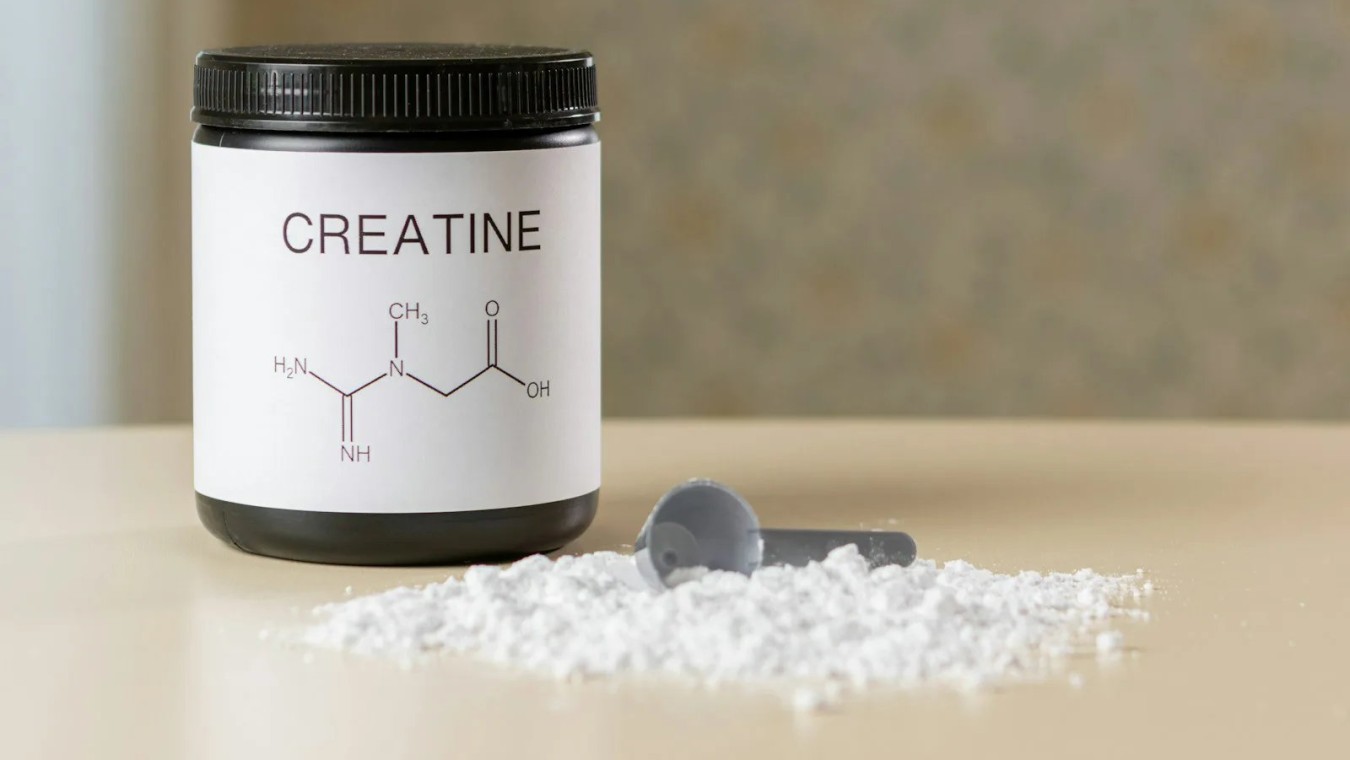
If you're a regular at the gym, you've surely heard of creatine. It is one of the most popular and well-researched nutritional supplements in the world. But what exactly is it, how does it work, and is it right for you? In this article, we will answer all your questions and debunk some of the most common myths.
What is creatine?
Creatine is an organic compound that our body produces on its own. It is found mainly in muscle cells, where it plays a key role in energy production. We can also get it through food, especially from red meat and fish. However, the amounts in food are relatively small, which is why taking it as a supplement is so effective for athletes and active people.
How does creatine work?
The main function of creatine is to support the production of adenosine triphosphate (ATP) – the main source of energy for muscle contractions. Simply put, when you train intensely (for example, when lifting weights or sprinting), your body uses ATP extremely quickly. Creatine helps to restore ATP levels faster, which allows you to do a few more repetitions, lift a little heavier, or sprint at full power for longer. The result is more strength, power, and endurance during your workout.
Main benefits of taking creatine
Proper creatine intake brings numerous benefits for anyone who wants to improve their physical performance:
- Increased strength and power: This is the most well-documented effect. More energy for the muscles means better results in the gym.
- Gaining muscle mass: Creatine supports muscle growth through several mechanisms, including increased cell volume and improved protein synthesis.
- Improved endurance during high-intensity exercise: Allows you to maintain a high pace for a longer time.
- Faster recovery: Reduces muscle damage and inflammation after a hard workout.
- Support for brain function: New research shows that creatine can improve memory and concentration, as the brain also uses ATP for its work.
Are there any side effects? (Myths and reality)
Many myths surround creatine, but science is clear: for healthy people, it is one of the safest supplements.
- Myth: Creatine damages the kidneys. Reality: Numerous long-term studies show that taking creatine in the recommended doses does not harm kidney function in healthy individuals.
- Myth: Creatine causes dehydration and cramps. Reality: Creatine actually increases the water content in muscle cells, which can improve hydration. There is no scientific evidence that it causes cramps.
- Myth: It needs to be stopped periodically. Reality: There is no need for "cyclical" intake. Creatine can be taken for a long time without negative effects.
The only common "side effect" is a slight weight gain (1-2 kg) at the beginning, which is due to water retention in the muscles – a clear sign that the product is working.
How to take creatine? (With or without a loading phase?)
There are two main approaches to taking creatine:
- With a loading phase: Take 20 grams per day (divided into 4 doses of 5 grams) for 5-7 days. Then continue with a maintenance dose of 3-5 grams daily. This method saturates the muscles faster.
- Without a loading phase: Take 3-5 grams daily. This method is simpler and achieves the same results, although after 3-4 weeks.
Both methods work great. Choose the one that is more convenient for you. Take creatine with water, juice, or a protein shake. The time of intake during the day is not crucial.
When to drink it?
- The timing is not critical. Daily intake and consistency are more important.
- You can have it with water, protein, or food – choose the most convenient option for you.
Which creatine to choose? (short and honest)
- Creatine monohydrate – the most researched form and the best value for money. -
- Look for a clear label, good solubility, and a proven manufacturer. -
- If you have a sensitive stomach: divide the dose (e.g., 2x2.5 g) and take it with food.
Frequently Asked Questions (FAQ)
Should I "cycle" creatine?
It's not mandatory. For most people, consistent daily intake is the most practical.
Can you drink creatine while losing weight?
Yes. Even in a calorie deficit, creatine can help you maintain strength and training volume. It is possible for the weight to increase slightly from water in the muscle – this is not fat.
Is it suitable for women?
Yes. The mechanism of action is the same. The differences in results most often come from the program, protein intake, sleep, and overall training volume.
How long should I take it?
A minimum of 6–8 weeks is a reasonable horizon for evaluation. For strength purposes, many people take it long-term.
Comparisons and alternatives
- Creatine monohydrate vs "new forms" – monohydrate remains the standard in terms of evidence. -
- If you are aiming for a "pump" and a feeling during your workout: also check out pre-workout formulas (they do not replace creatine).
Conclusion
Creatine is not a magic pill, but it is an extremely effective and safe tool that can significantly improve your results in the gym. It is the perfect addition to a balanced diet and a proper training regimen for anyone aiming for more strength, muscle mass, and better recovery.
Are you ready to unlock your full potential? Check out our selection of high-quality creatine supplements and find the most suitable product for your goals!