

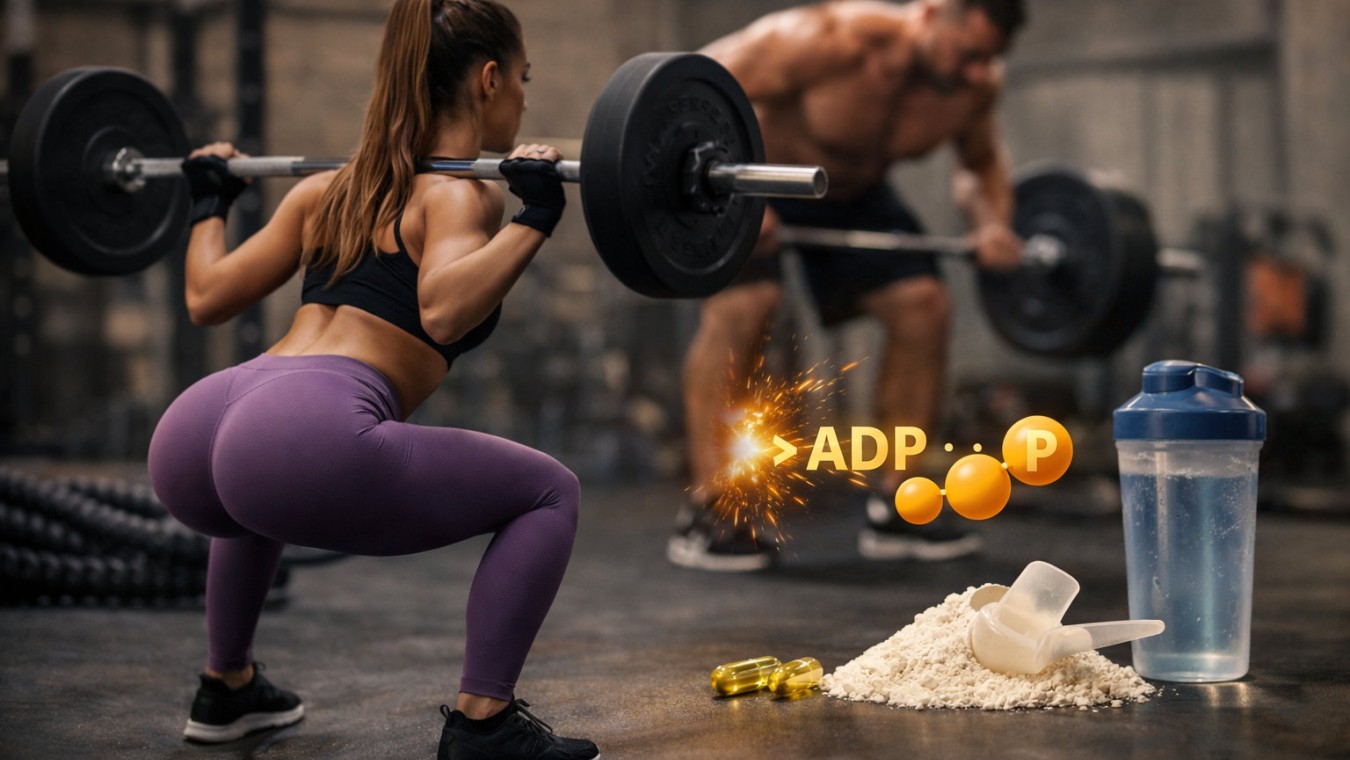
Have you ever wondered exactly what happens in your body when you lift a heavy barbell, sprint, or even just stand up from a chair? All these movements require energy, but it doesn't come directly from the food you eat. The real "engine" of your cells is a small but extremely powerful molecule called Adenosine Triphosphate (ATP).
In this article, we will look in detail at what ATP is, why it is so critical for your workouts, and how you can help your body produce it more efficiently to achieve better results in the gym.
What is ATP (Adenosine Triphosphate)?
ATP is a molecule that carries energy within the cells of all living organisms. It is often called the "energy currency" of the body. Just as you need money to buy goods and services, your cells need ATP to perform work – from muscle contractions to transmitting nerve impulses and building new tissues.
The food we consume (carbohydrates, fats, and proteins) actually serves as the raw material that the body breaks down and converts into ATP through various biochemical processes. Without ATP, life as we know it would simply not be possible.
How Does ATP Work in the Body?
The mechanism of energy release from ATP is relatively simple but ingenious. The ATP molecule consists of one adenosine part and three phosphate groups. Energy is "stored" in the chemical bonds between these phosphate groups.
When the body needs energy, one of these phosphate groups is released (a process called hydrolysis). In doing so, ATP turns into ADP (adenosine diphosphate) and a significant amount of energy is released, which the cell uses immediately. The body then uses energy from food or stored resources (such as glycogen) to "reattach" the phosphate group to ADP and create ATP again. This continuous cycle is at the heart of your metabolism.
Why is ATP So Important for Training?
In the context of fitness and sports, ATP is the only energy source that muscles can use directly to contract. The problem is that muscle cells store very little ready-to-use ATP – enough for only 2-3 seconds of maximum effort.
This means that to continue your workout, your body must constantly regenerate ATP at the same rate it is consumed. The speed and efficiency with which you manage to do this determines your strength, explosiveness, and endurance. If ATP levels drop too much, muscle fatigue sets in, and you simply stop – the body "shuts down" to protect itself.
How Does the Body Restore ATP Levels?
The body uses three main energy systems to regenerate ATP, depending on the intensity of the movement:
- Phosphagen System (Creatine Phosphate): The fastest way to restore ATP. Used during short, maximum efforts (like a 100-meter sprint or a maximum lift). Relies on creatine phosphate stores in the muscles.
- Anaerobic System (Glycolysis): Breaks down carbohydrates (glycogen) without oxygen. Provides energy for efforts lasting from 30 seconds to 2 minutes.
- Aerobic System: The slowest but most efficient process, using oxygen to break down fats and carbohydrates. It is the primary fuel for prolonged cardio activities.
How Can We Optimize ATP Production?
The good news is that you can support energy processes in your body through proper nutrition, supplements, and recovery:
- Creatine Monohydrate: This is the most effective supplement for increasing creatine phosphate levels, which directly speeds up ATP regeneration during strength training.
- Magnesium: Magnesium is necessary for almost every reaction related to ATP. In fact, ATP usually exists in cells as a complex with magnesium (Mg-ATP).
- B Vitamins: They play a key role as coenzymes in the processes of converting food into cellular energy.
- Proper Nutrition: Ensuring sufficient carbohydrates for glycogen levels is critical for anaerobic endurance.
Conclusion
Understanding ATP helps us understand why our body reacts in a certain way to different types of exertion. When you know that ATP is your true fuel, it becomes clear why details like creatine intake, magnesium availability, and rest between sets are so important for your progress.
Want to improve your body's energy levels and train more intensely? Check out our category of creatine products and vitamins and minerals that will support ATP production in your cells!
Note: This information is for informational purposes and does not replace consultation with a specialist. Results may vary depending on individual characteristics, nutrition, and lifestyle.